
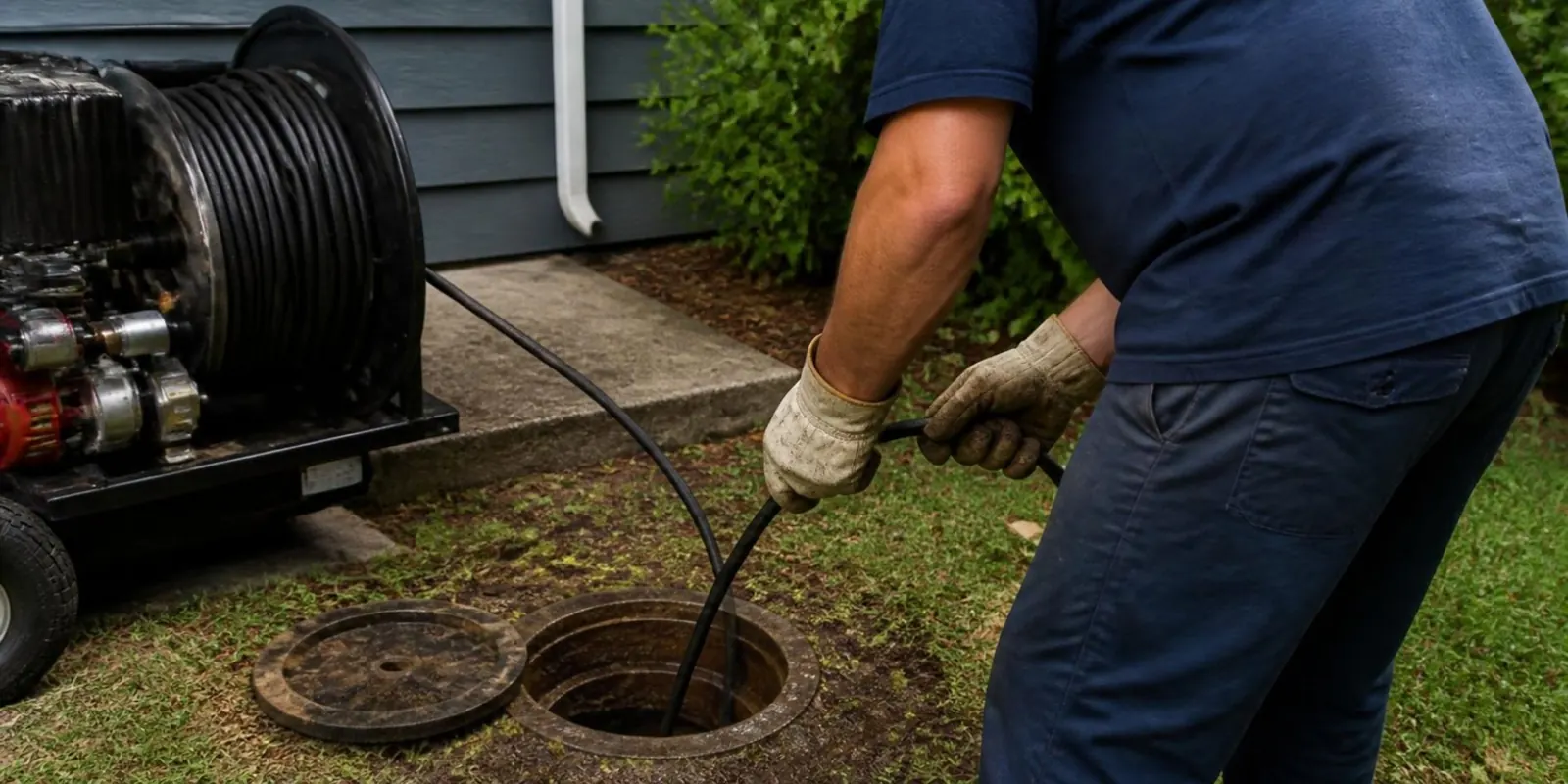
Main sewer backup: act now
A main sewer backup shows up at the lowest fixture first. That is often a basement floor drain, a ground-floor tub or a toilet. If you see wastewater rising, stop using water immediately and call our 24/7 line.
Every flush and every load of laundry sends more water into a plugged pipe. Stopping water use buys time and limits the damage. Keep people and pets out of the affected area, since sewage carries bacteria.
What clogs a main sewer line
Roots are a leading cause, entering at pipe joints and growing into a mat that catches paper and waste. Grease is the second, building along the pipe wall until the opening is the size of a pencil. Flushed wipes, paper towels and feminine products make up much of the rest.
Less common causes include a collapsed pipe, a belly that traps waste and a broken pipe where soil enters. A camera tells us which one we are dealing with, and we recommend one whenever the same clog returns.
Cleaning method by cause
| Cause | Method | Follow-up |
|---|---|---|
| Roots | Cable with a cutting head, or a jetter with a root nozzle | Camera, then repair the joint if roots will return |
| Grease | Hydro jetting | Kitchen habits and periodic checks |
| Flushed wipes or debris | Cable or retrieval tool | None, if the pipe is sound |
| Collapsed or bellied pipe | Clear enough to restore flow | Excavation and repair |
If your line has plugged more than once, a sewer camera inspection is the best next step.
Sewage in the house: first steps
Wastewater inside a home is a health issue. These steps limit exposure and help us work faster.
- Stop water. Shut off supply to fixtures that drain to the main if you can, or simply stop using them.
- Avoid contact. Wear boots and gloves if you must enter, and wash well afterward.
- Open windows. Ventilate the area if it is safe and dry underfoot.
- Call dispatch. Give us the lowest fixture that is backing up and how long it has been happening.
Main lines in Lake Stevens
In Lake Stevens, wastewater leaves your house through a side sewer that connects to the Lake Stevens Sewer District's main. If a blockage sits in your private line, it is yours to clear. If the district's main is the problem, neighbors on the same street usually see backups too, so check before you pay for cleaning.
Roots are a common cause of main-line clogs on lots with large trees, so ask us about root cutting if yours has them, especially on older lots near the lake.
Main line plugged? Call and we will dispatch cleaning equipment.
Call (360) 371-6092Code and standards in the cleaning
Cleanouts required by the Uniform Plumbing Code (UPC), adopted in Washington with state amendments under WAC 51-56, are the usual access point for cleaning a main line. If your home lacks an accessible cleanout, a plumber may recommend adding one, which is work the building department can tell you how to permit.
What affects cleaning cost
You hear the price before work begins.
Cleaning is not repair. If a camera finds damage, we price the repair separately so you can decide.
Questions we hear
Do you handle sewer emergencies at night or on weekends in Lake Stevens?
Yes. Our dispatch line is staffed around the clock. Stop using water and call, and we will send equipment suited to a main-line blockage.
How do I tell if my main sewer line is blocked?
Several fixtures backing up together, or the lowest drain overflowing, points to a main-line clog. A single slow sink is usually a branch clog.
Will the sewer clog come back?
If roots or a belly caused it, yes, until the pipe is repaired. A camera will show the reason.
Can I clean the main line myself?
Rented equipment can injure you or the pipe, and chemical cleaners rarely reach a main-line clog. A plumber with the right cable and a camera is the safer route.
How often should a main sewer line be cleaned?
Only when the line shows symptoms or a camera finds buildup. Homes with big trees or a history of clogs may benefit from periodic checks.
Every drain in the house slow? Call and we will clear the main line.
Call (360) 371-6092