
Emergency leak detection: what to do before we arrive
A leak is an emergency when water is visible, spreading or hidden behind a surface you can see staining. Shut off the main water valve, turn off power to wet areas and call our 24/7 line. Finding the leak quickly can save floors, drywall and a lot of money.
If you cannot find the main shutoff, look near where the water line enters the house or at the meter box in the yard. Shutting off the main stops the loss while we locate it. We then use non-invasive tools to pinpoint the leak before any repair.
Symptoms that point to a hidden leak
These are the signs callers describe most often. Any of them is worth a call.
- Meter still running with every fixture off. A small dial or leak indicator keeps turning.
- High water bill with no change in household use.
- Warm spot on the floor or a floor that feels damp, often a hot line leaking under a slab.
- Stain or bubbling paint on a ceiling or wall, sometimes with a musty smell.
- Low water pressure that arrived suddenly at several fixtures.
- Sound of running water in the walls at night with everything off.
Meter test: how we confirm a leak first
The simplest test costs nothing. Turn off every tap, appliance and ice maker, then read the meter. Wait 20 minutes, read it again and compare. If it moved, water is leaving the house system somewhere, and the next question is where.
We then isolate sections by closing valves one at a time. If the meter stops after shutting the house main, the leak is inside. If it keeps moving, the leak is in the line between the meter and the house, often buried in the yard.
How we find it
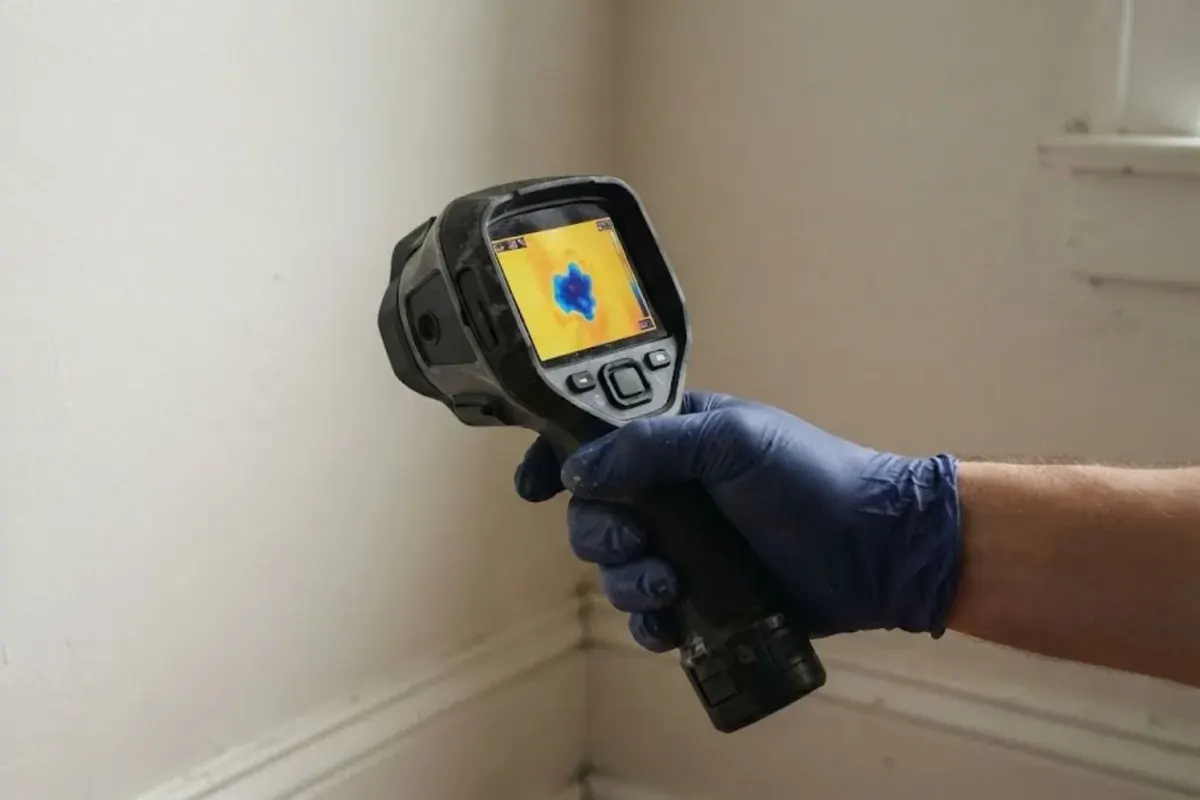
Acoustic listening gear picks up the sound of water escaping under pressure through a pipe wall. Thermal imaging shows temperature differences from a hot water leak or damp building material. A moisture meter confirms the wet area before we mark it.
Many leaks end up in specific places. Slab leaks usually sit under floors on a concrete foundation. Crawlspace leaks show up on supply lines under the house. Ceiling and wall leaks often trace back to a fixture drain, supply line or roof penetration. Irrigation and yard leaks tend to show as wet ground or green patches.
Slab, crawlspace and under-house leaks
Water under a slab can warm a floor or run toward a footing, and crawlspace leaks can soak insulation and wood for weeks. We locate the leak and discuss repair options, including rerouting a line over the slab when access to the pipe is poor.
Ceiling, wall and attic leaks
A ceiling stain is the end of a water path, not the start. We trace upward through the framing with moisture and thermal readings to the actual source, which may be a drain, a supply line or a vent boot on the roof.
Buried lines, yard and meter-box leaks
A soft patch in the lawn or a hissing meter box can mean a leak in the line from the meter to the house. Because that line is usually buried, we confirm the location before any digging so the trench is as short as possible.
Leaks and water use in Lake Stevens
Snohomish County PUD supplies Lake Stevens water and bills it by meter, so a high bill is often the first sign of a leak. Ask the PUD how to read your meter and whether it can review recent usage. Their water utility phone is 425-397-3000.
Lake Stevens covers about 9 square miles, and much of its housing was built after 2000. Newer homes tend to have PEX supply lines and plastic drains, where leaks show up at fittings. Older homes near downtown can have copper or galvanized pipe that corrodes through over decades.
Watching your meter spin? Call now and we will walk you through a quick test.
Call (360) 371-6092What affects leak detection pricing
You get a clear price before the survey begins.
Insurers often cover sudden water damage but not the cost of finding the leak. Ask your carrier about leak detection coverage before authorizing work.
Code and standards after a leak is found
Finding a leak is non-invasive, but repairing it can mean cutting and replacing pipe. That work falls under the Uniform Plumbing Code (UPC) as adopted in Washington with state amendments, WAC 51-56. Ask the City of Lake Stevens building department whether a repair of that size needs a permit.
Irrigation, yard and pool leaks
Sprinkler systems leak at valves, heads and buried laterals, and the symptom is usually a patch of wet ground or a bill that climbs in summer. We test the system under pressure to separate irrigation loss from the house line. We do not repair pool equipment but we can check the supply line feeding a pool or spa.
Questions we hear
Do you offer emergency leak detection at night or on weekends in Lake Stevens?
Yes. Call the 24/7 line. If water is spreading, shut off the main valve first, then call and we will schedule a survey.
How do I know if I have a hidden leak?
A water meter that moves with all fixtures off, a sudden jump in your bill, a warm floor or an unexplained stain are the common signs.
Will you tear out walls to find a leak?
No. We locate the leak with listening equipment, thermal imaging and moisture readings first, so any opening is as small as possible.
What is a slab leak?
A leak in a water line running under or through a concrete slab. Signs include a warm floor, the sound of water running and a high bill.
Can you find a leak in the yard?
Yes. We test the line from the meter to the house and the irrigation system to see where pressure drops.
Unexplained wet spot or high bill? Call and describe it.
Call (360) 371-6092